


Opinion. Proposition A would lock in Pre-K 4 SA’s sales tax through 2049 for a program whose leaders are still sketching out what it will become. Voters should say no and ask for a real plan.
San Antonio voters approved Pre-K 4 SA in 2012 and renewed it in 2020, each time for eight years. Proposition A asks for something no city program here has ever received: the one-eighth-cent sales tax continued from 2029 all the way to 2049, with no vote in between. Before handing over two decades, voters deserve a clear answer to a simple question. What, exactly, are we buying?
| Prop A at a glance | The facts |
|---|---|
| What it does | Continues the 1/8-cent sales tax for Pre-K 4 SA from 2029 through 2049 |
| Previous terms | 8 years each (2012 and 2020) |
| Council vote to call the election | 7-2; Spears and Whyte opposed |
| Fiscal 2027 budget | $62.3 million; 502 employees |
| Children in the four centers (2024-25) | 2,041; 53.2% were 3-year-olds |
| Posted teacher salary (2026) | $63,771.50 to $80,352.22 |
| If Prop A fails | Current funding still runs through 2029 |
| Voting | Early voting through Oct. 30; Election Day Nov. 3 |
From pre-K to city-run daycare
The 2012 pitch was full-day pre-K for 4-year-olds. The plan for the next 20 years is something else. Pre-K 4 SA says it would expand toddler seats and invest in care for families who work nights and weekends or need drop-in care, and it has been piloting nontraditional childcare at three centers. Walking council through the costs, CEO Sarah Baray noted that overnight care means buying beds. Its South Education Center already serves infants and toddlers.
The shift has already happened. In the 2024-25 school year, the program served more 3-year-olds (53.2 percent) than 4-year-olds (46.8 percent), according to its own independent evaluator.
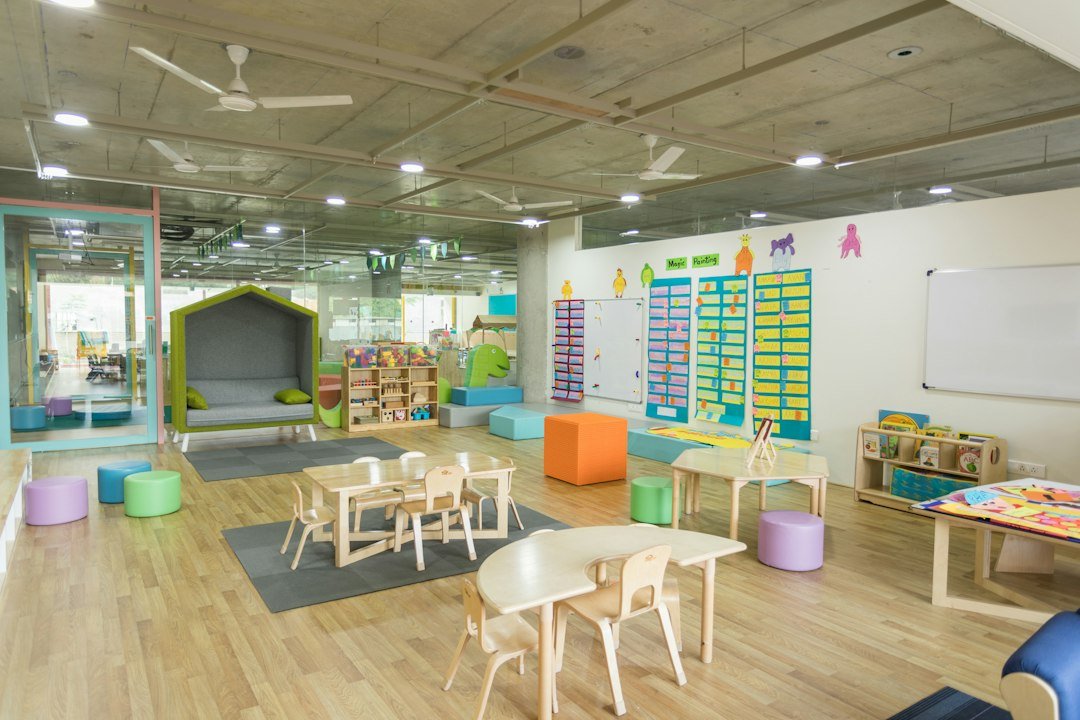
Critics have called this state-run daycare. Strictly speaking, it is city-run: its job postings are issued by the City of San Antonio’s Pre-K 4 SA Department. Either way, the label fits better than the brochure.
Twenty years, sold in a hurry
Program leaders had expected to return to voters in 2027 or 2028, the San Antonio Express-News reported. Instead, City Council moved the vote up and stretched the term. The vote was 7-2, with Misty Spears and Marc Whyte opposed over the length of the commitment and the lack of detail on how the money would be spent. Phyllis Viagran, who was absent, later said she would have voted no because of how fast the process moved.
The spending details came only after the election was ordered. In September, council members asked Baray for more specifics and numbers, and the partnership ideas she floated were described as still very conceptual.
Why the rush? A political consultant who has worked for the measure’s chief sponsor told the San Antonio Report that with strong Democratic turnout expected in the U.S. Senate race, “this would be the time to do it.” A 20-year tax should rest on a plan, not a turnout model.
Follow the money
Pre-K 4 SA proposed spending $62.3 million in fiscal 2027, with the same 502 employees as the year before.
One council member did the math out loud. Councilwoman Marina Alderete Gavito questioned whether today’s program is what voters were sold in 2012, citing small enrollment at the four campuses and the city’s budget crisis. Her arithmetic: “that’s $31,000 a student… that’s more than St. Mary’s Hall.”
Baray says that figure misreads the program, because the budget also pays for business support and training for other providers, school district partnerships and wraparound services. Fair enough. Use the program’s own number, then: about $16,600 per student per year, versus just over $13,200 at the average San Antonio school district, according to the Express-News. The program says much of the gap comes from its 10-hour day versus the districts’ 7-hour day. A 10-hour day is a working parent’s childcare day. That is the point.
The salary question
A 2026 city posting lists Pre-K 4 SA teacher pay at $63,771.50 to $80,352.22 a year. A professional learning specialist posting lists $74,200.36 to $111,300.54, and a behavioral specialist $76,525.80 to $96,422.56.
This is by design. In 2017, the program’s average teacher salary was reported at $66,500, against an average San Antonio teacher salary of $51,400. In 2020, Baray said the program was built to pay teachers and assistants a living wage and to pay them for professional learning time. Even its evaluator describes the centers as showing what children can do with highly skilled, well-compensated teachers.
Nobody begrudges good teachers good pay. But Pre-K 4 SA now wants to grow its network of contracted providers from 90 to 300 and presents itself as the answer to San Antonio’s childcare shortage. Voters should ask whether a tax-funded city operation whose teacher pay starts near $64,000 strengthens the church-based, family-run and neighborhood centers it says it wants to help, or competes with them for the same teachers. A 20-year authorization means nobody has to answer that question at the ballot box until 2049.
Austin already pays for pre-K
This is not 2012. The 2019 school finance law, HB 3, requires districts to offer full-day pre-K to eligible 4-year-olds, and districts can still draw half-day state funding for eligible 3-year-olds. The law set aside $780 million a year for districts through an early education allotment.
Pre-K 4 SA answers that gaps remain: the state does not require districts to serve 3-year-olds, and Baray says only about half of 4-year-olds qualify. Those gaps are real. The fix is to press Austin on eligibility and to partner with districts that answer to elected trustees, not to bankroll a parallel city system through 2049.
The “only government can fill this” argument was weak even at the start. In 2012, then-Commissioner Kevin Wolff pointed out that more than 600 public and private institutions in Bexar County already supplied pre-K education.
What the evidence does and does not show
Supporters will point to results, and some are real. A UTSA study of the first class found Pre-K 4 SA alumni scored 3.8 points higher in reading and 4.5 points higher in math on third-grade STAAR than similar students without public pre-K. The program’s latest annual evaluation reports significant fall-to-spring gains on every teacher-rated readiness measure.
That same evaluation, by the research firm Westat, lists its own limits: no control group of similar children, pre-COVID comparison norms, findings based on a subsample, and some reliance on teacher-reported outcomes. It says a comparison group was not possible because of resource constraints. On direct testing, the share of children at or above age level in early literacy fell from 44.4 percent in the fall to 34.9 percent in the spring, and most children were still performing below their age level. Years ago, then-Councilman Greg Brockhouse raised the same concern about the missing comparison group. It is still missing.
Oversight exists. A city audit found the program was not doing enough to make sure its contracted bus drivers met qualifications, and the program accepted all of the auditors’ recommendations. In 2025 it sought bids for independent financial auditing. But the most important checkup voters have is the reauthorization vote itself, and Prop A cancels it for two decades.
Every dollar locked up is a choice taken away
City Hall is not flush. San Antonio faces a ballooning deficit likely to bring its first tax rate increase in decades, and some programs are already on the chopping block.
This one-eighth cent is also the last slice of sales tax state law would allow for transit, and VIA calls itself the least-funded major transit authority in Texas, the Express-News reported. Two former VIA board members, Bob Comeaux and Tom Cummins, oppose Prop A and want a public debate first. You do not have to want a bigger VIA to see the problem. Roads, public safety, transit, or simply letting a tax expire are choices San Antonians might want to make in the next 20 years. Prop A takes them off the table.
Who is writing the checks
The Renew Pre-K 4 SA campaign raised more than $370,000 in one month this fall, according to the Express-News. H-E-B chairman Charles Butt gave $100,000, Gambrinus Company CEO John Brozovich gave $50,000, and Frost Bank, Holt Cat and USAA together gave $150,000.
Supporters say a longer term would help the program replace leased sites with buildings it owns. Its South Center was built through a public-private partnership with the Holt Group and is being leased to own. Nothing about that is illegal. But when a campaign contributor is also the program’s development partner, voters are entitled to more checkups, not fewer.
What a No vote actually does
A No vote closes no classroom. If voters say no, the program’s current funding still runs until 2029. Councilman Jalen McKee-Rodriguez, the measure’s chief sponsor, has said that voting now leaves time to bring it back in 2027 or 2028 if it fails.
So a No vote is a request, not a rejection. Come back with an eight-year term, a per-child cost broken out by service, an evaluation with a real comparison group, and a clear line between pre-K and citywide daycare. That is not hostility to children. It is the minimum any taxpayer should expect before signing a 20-year check.
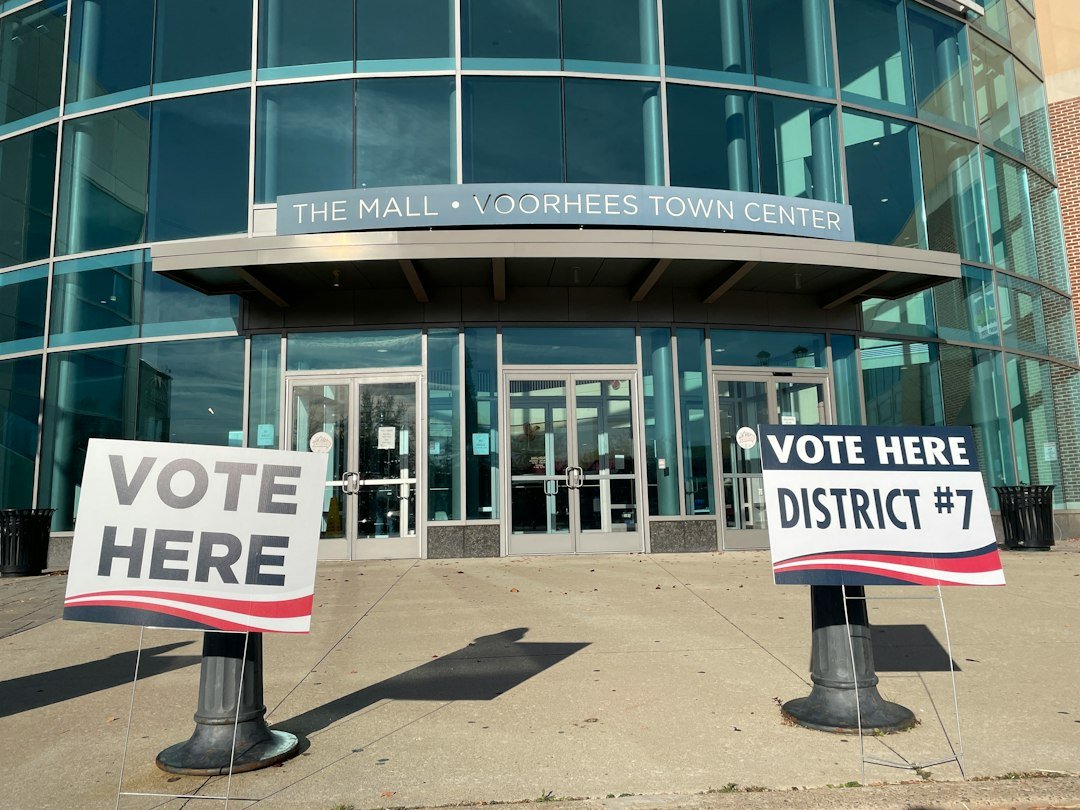
Early voting runs through Oct. 30. Election Day is Nov. 3.
Voting in Bexar County? See the 2026 Texas & Bexar County Voter Guide for candidate comparisons, early voting hours, mail ballot deadlines and voter ID rules.