

Opinion. The San Antonio Express-News editorial board admitted the Texas economy has been robust under Gov. Greg Abbott, then endorsed his opponent anyway. Here is what the endorsement left out.
The San Antonio Express-News Editorial Board opened its Oct. 9 endorsement of state Rep. Gina Hinojosa with an admission it never got past: under Gov. Greg Abbott, “the state’s economy has been robust.” Then it argued Texans should fire the man who presided over it.
That admission deserves more than a passing clause. Texas hit a record 14.47 million nonfarm jobs in June. In the 12 months ending in September, the state added 154,300 jobs, growing 1.1 percent while the nation grew 0.3 percent, according to the Texas Workforce Commission. Since Abbott took office in January 2015, Texas has added roughly 2.6 million jobs. “Three terms is long enough” is not an argument. It is a mood. Voters should judge results.
The endorsement versus the record
| What the board said | What the record shows |
|---|---|
| The economy has been “robust” | Agreed. Record 14.47 million nonfarm jobs in June 2026; 1.1% annual job growth vs. 0.3% nationally |
| The border emergency “subsided years ago” | 98,708 southwest border apprehensions in FY2026, a record low; Texas awarded $7.5 billion in federal reimbursement |
| The basic allotment rose a “meager $55” | HB 2 added $8.5 billion for public schools, including $4.2 billion for permanent teacher and staff raises |
| Abbott funnels public money to private schools | More than 274,000 students applied for education savings accounts in year one; nearly three in four from low- or middle-income families |
| Abbott pays “lip service” on data centers | August 2026 directive paused new data center grid approvals pending audits |
| Hinojosa’s $1,500 checks are shortsighted | About $17 billion in one draw, versus $17.4 billion withdrawn from the rainy day fund since 1988 |
The board’s own red flag
The most revealing paragraph in the endorsement is the one where the board breaks with its candidate. Hinojosa’s signature affordability idea, which her campaign calls a “Corruption Tax Refund,” would send $1,500 to every household at a cost of about $17 billion from the Economic Stabilization Fund. The board calls it shortsighted and predicts the Legislature will block it.
Consider the scale. According to the comptroller, lawmakers have withdrawn a combined $17.4 billion from the rainy day fund since it was created in 1988. Hinojosa would spend nearly that much in one stroke, on a one-time check, at what the board itself calls a time of economic uncertainty. A candidate’s signature idea tells you how she would govern. This one treats the state’s savings account as campaign money. The board noticed. It endorsed her anyway.
The border did not fix itself
The board says Abbott is wasting billions on an emergency that “subsided years ago.” Crossings did fall, dramatically. Border Patrol recorded 98,708 southwest border apprehensions in fiscal 2026, the lowest in agency history, compared with more than 1.8 million a year under the prior administration, according to the Department of Homeland Security. But the emergency did not subside on its own. For four years, Texas paid for barriers, troopers and Guard deployments while Washington declined to act. State officials report more than 500,000 apprehensions and more than 54,000 criminal arrests under Operation Lone Star.
And the bill is being paid back. Texas has been awarded $7.5 billion in federal reimbursement for its border costs. Abbott bet that Washington would eventually own its responsibility, and that bet is paying off. Reasonable people can debate how long the disaster declaration should stay in place. Calling the mission a waste ignores both its results and its refund.
Schools: the $55 talking point

The board calls last year’s basic allotment increase a “meager $55.” The number is accurate and badly incomplete. House Bill 2, which Abbott made an emergency item and signed in June 2025, put $8.5 billion in new money into public schools, including $4.2 billion for permanent teacher and staff raises, with experienced teachers in smaller districts eligible for up to $8,000. Lawmakers chose targeted dollars over a bigger across-the-board allotment. You can argue with that choice. You cannot honestly describe the package as $55.
On school choice, the board says Abbott is funneling public money to private schools. Texas families answered that charge themselves. More than 274,000 students applied for Texas Education Freedom Accounts in year one, a national record according to the comptroller, and nearly three-quarters came from low- or middle-income families. Students with disabilities got first priority. The program’s $1 billion sits alongside $8.5 billion in new public school money passed the same year. Those are not the numbers of a war on public education. They are the numbers of a state giving parents more than one option.
Data centers and electric bills
The board says Abbott offers only “lip service” on data centers. In August, he directed state grid regulators to stop approving new data center connections pending audits, after roughly 90 percent of new large power requests turned out to be data centers. He has also pledged to use the 2027 session to end their tax breaks, rein in their water and power use, and keep connection costs off Texans’ bills. Critics wanted a special session. That is a fair argument about timing. “Lip service” it is not.
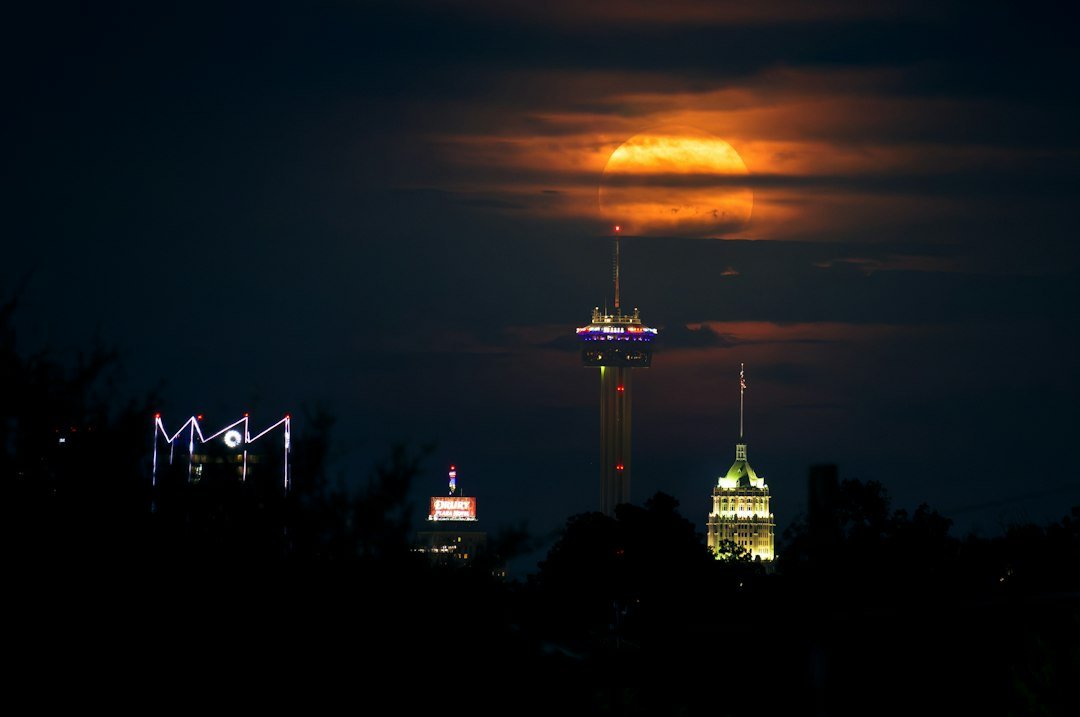
On CPS Energy, the board calls Abbott’s retail choice plan an “assault on cities.” Start with what is not in dispute: CPS sends 14 percent of its gross revenue to City Hall, about $504 million this fiscal year and nearly 30 percent of the city’s general fund. Abbott points out that more than 100,000 people outside the city limits pay CPS bills, which means they help fund a city government they cannot vote for. His office projects 13 percent average residential savings under competition, a campaign estimate that deserves independent testing. But the underlying question is fair: should your electric bill double as a city tax?
Redistricting cut both ways
The board blames Abbott alone for a redistricting “arms race.” Hinojosa joined the August 2025 Democratic quorum break that left for Illinois to block the vote, and California Democrats answered by setting aside their own independent commission with Proposition 50. Mid-decade redistricting is fair game for criticism. Pinning it on one governor, while endorsing a candidate who fought in the same war, is not analysis.
The airports
The board’s harshest charge involves foot-washing stations at DFW and Bush Intercontinental, and on the facts it has a point. DFW’s CEO said no state or federal money paid for its stations, and Houston says the IAH facilities are open to travelers of every faith. But a dispute over airport fixtures is not a governing philosophy, and it is a thin foundation for choosing a governor.
The choice
Strip away the adjectives and the endorsement comes down to this. The economy is setting records. Teachers received what legislative leaders called the largest pay raise in state history. Southwest border apprehensions are at an all-time low. Washington is repaying Texas for holding the line. The board would trade that for a candidate whose headline proposal it rejects and whose first education promise is to fire the state’s education commissioner.
Texans do not need a new direction. They need the one that is already working. That is Greg Abbott.
Voting in Bexar County? See the 2026 Texas & Bexar County Voter Guide for candidate comparisons, early voting hours, mail ballot deadlines and voter ID rules.