


Opinion. Congress wrote mandatory detention into law in 1996. On Friday, the full 5th U.S. Circuit Court of Appeals enforced it, and the coverage most San Antonians read got the framing backward.
The full 5th U.S. Circuit Court of Appeals ruled 10-7 on Friday, Oct. 23, that illegal immigrants detained by Immigration and Customs Enforcement while their deportation cases proceed have no constitutional right to a bond hearing. The decision covers Texas, Louisiana and Mississippi, and the court ordered that “the mandate shall issue FORTHWITH,” meaning it takes effect immediately.
The case, Sosnava Rodriguez v. Ortega (No. 26-50183), reversed three federal district court orders out of the Western District of Texas that had freed three men who entered the country illegally and were later picked up after traffic stops. It also wipes away a July 2 panel decision that would have required bond hearings after about 90 days. The full court threw out that panel ruling on its own motion eight days after it was issued.
The ruling closes a side door. The 5th Circuit had already sided with the administration on the statute in February. But according to a Politico analysis of habeas petitions, federal judges in Texas then “ordered bond hearings or release for more than 2,000 ICE detainees” on constitutional due process grounds. Politico said that approach left the February win with “a limited impact.” Friday’s ruling holds that the Constitution does not require those hearings, so that route is now closed in Texas, Louisiana and Mississippi.
The Texas Tribune’s report on the ruling, republished by the San Antonio Current, told readers the decision was a blow to “due process” driven by a Trump “policy change.” The statute, the opinion and the government’s own data tell a different story.
What the court held
Judge Cory Wilson wrote for the majority that the three men “were not entitled to individual hearings on their dangerousness or flight risk” before being held pending removal. Because they were never lawfully admitted, he wrote, “due process does not entitle them to additional proceedings beyond what Congress has provided before they may be detained pending removal.”
Wilson also made a point the critics would rather skip. A detainee who wants out can get out “at any moment by agreeing to leave the country.”
Judge Andrew Oldham, concurring, wrote that “[h]abeas corpus provides zero substantive liberty guarantees” and that one petitioner “held the keys to his detention room.” Judge James Ho, also concurring, put it plainly: “A nation ceases to be a nation if it can’t protect its borders.”
Joining Wilson’s opinion were Chief Judge Jennifer Walker Elrod and Judges Edith Jones, Jerry Smith, Don Willett, Ho, Stuart Kyle Duncan, Kurt Engelhardt and Oldham. Judge Priscilla Richman concurred in the judgment only, but she agreed with the majority that each petitioner is “‘deemed’ to be ‘an applicant for admission'” under the statute.
Why the court ruled this way: the text
This is not a new rule invented in 2025. It is a 1996 law that Washington spent nearly three decades not enforcing as written.
Under the Illegal Immigration Reform and Immigrant Responsibility Act of 1996, signed by President Bill Clinton, any alien “present in the United States who has not been admitted” is legally an “applicant for admission,” 8 U.S.C. 1225(a)(1). If an officer finds that person is “not clearly and beyond a doubt entitled to be admitted,” the statute says “the alien shall be detained” for removal proceedings, 8 U.S.C. 1225(b)(2)(A). The release valve Congress provided is discretionary parole under 8 U.S.C. 1182(d)(5), not bond.
The petitioners did not dispute that they are “applicants for admission.”
For years, immigration agencies let many such people request bond anyway under a different section, 8 U.S.C. 1226(a). A 1997 Federal Register notice said they could. But in Buenrostro-Mendez v. Bondi in February, a 5th Circuit panel held that years of practice “cannot vindicate an interpretation” that conflicts with the statute, because “the text controls.” The 8th Circuit reached the same conclusion in Avila v. Bondi in March.
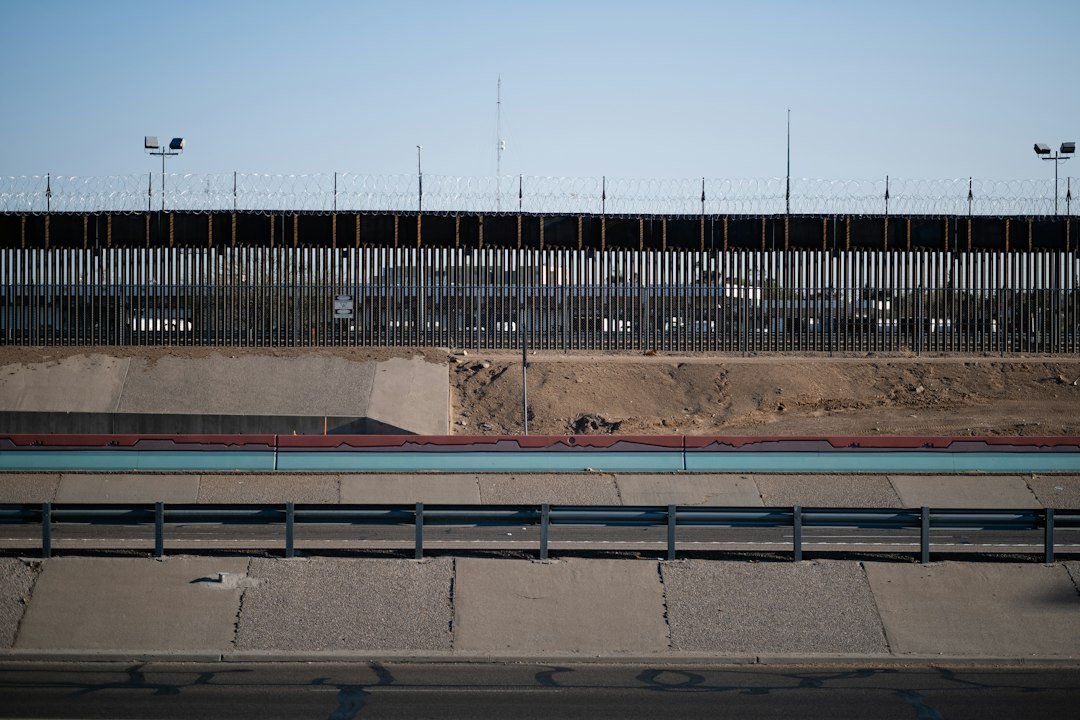
Photo: Levi Meir Clancy / Unsplash
Why the court ruled this way: the Constitution
On the constitutional question, the majority leaned on settled Supreme Court precedent. In DHS v. Thuraissigiam (2020), the high court held that an unadmitted alien has “only those rights regarding admission that Congress has provided by statute.” In Demore v. Kim (2003), it held that detention during removal proceedings is “a constitutionally permissible part of that process.” Wilson’s opinion says simply: “Demore provides the answer.”
The court was also measured. Quoting Jennings v. Rodriguez (2018), it noted that “[o]nce [removal] proceedings end, detention under 1225(b) must end as well.” It said detention with a “definite termination point” does not violate due process, while cautioning that the government may not use delay as punishment and that a different question could arise if removal became only a remote possibility.
The detentions in this case were short. In the court’s words: “Gomez was detained for three months; Sosnava, for roughly two months; and Villegas, just three weeks.”
Why it matters
The numbers explain why Congress wrote “shall.”
Median days to finish an immigration court case
Cases received FY2016 to FY2023 that reached an initial decision. Source: GAO-25-106867 (Dec. 2024).
| Measure | Figure | Source |
|---|---|---|
| Median case time, detained | 52 days | GAO-25-106867 |
| Median case time, not detained | 625 days | GAO-25-106867 |
| In absentia removal rate, non-detained cases (FY2016 to FY2023) | 34 percent | GAO-25-106867 |
| In absentia removal orders, FY2024 | 222,223 of 309,879 removal orders | CRS IN12501 |
| Unenrolled Alternatives to Detention participants who absconded (Nov. 2014 to 2020) | About 1 in 4 | GAO-22-104529 |
| Pending removal cases, end of FY2024 | About 3.6 million | CRS IN12501 |
| ICE detainees held in Texas (Apr. 4, 2026) | 17,908 of 60,311 | TRAC |
| Texas detainees ordered released or given bond hearings after the February ruling | More than 2,000 | Politico analysis |
- Speed. The nonpartisan Government Accountability Office found that for immigration cases received from fiscal 2016 through 2023, the median case for a detained person was completed in 52 days. For people not detained it took 625 days, roughly 1.7 years.
- No-shows. The same GAO report found a 34 percent in absentia removal rate for non-detained cases over that period. That is, a judge ordered the person removed after they failed to appear. In fiscal 2024 alone, immigration judges issued 222,223 in absentia removal orders out of 309,879 total removal orders, according to the Congressional Research Service.
- Alternatives have limits. GAO found that about a quarter of people taken off ICE’s Alternatives to Detention program before their cases ended had absconded, meaning ICE could no longer locate them.
- Backlog. About 3.6 million removal cases were pending at the end of fiscal 2024, per CRS.
- Texas is ground zero. As of April 4, 2026, Texas held 17,908 of the 60,311 people in ICE detention nationwide, according to TRAC data. A ruling binding Texas courts reaches nearly 30 percent of the national detained population.
Release on bond moves a case onto the slow track, where about a third of cases have ended in a removal order issued because the person did not show up. Detention keeps it on a track measured in weeks.
What the Tribune got wrong
The Tribune report by Uriel J. García accurately states the vote, the author and the outcome. The problem is what surrounds those facts.
1. “Without allowing them to see a judge.” The Tribune wrote that ICE “held them in detention without allowing them to see a judge.” Detention under 1225(b)(2)(A) is for removal proceedings, which are heard by immigration judges. And all three men did see federal judges, who granted habeas petitions and ordered their release. The Tribune itself reports that. What they did not get was a bond hearing, which is the question the court decided.
2. “The law gave them the right.” The Tribune stated as fact that for long-term residents, “the law gave them the right to challenge their detention.” That was agency practice. Whether the statute ever granted it is exactly what the courts are fighting over, and the 5th Circuit, the 8th Circuit and the Board of Immigration Appeals (Matter of Yajure Hurtado, 2025) have all said it did not. Presenting a contested legal question as settled is editorializing.
3. “A policy change by the Trump administration.” That subhead points readers to the wrong author. The words “shall be detained” have been in federal law since 1996. What changed in July 2025 was that ICE began enforcing the text as written, a reading two federal appeals courts have now upheld.
4. “Indefinitely.” The Tribune relayed, without challenge, an advocate’s warning that the court believes the government can hold people “indefinitely.” The opinion says the opposite: detention ends when proceedings end, it has a “definite termination point,” and the detainee can end it at any time by agreeing to leave.
5. The head count. The Tribune cited a Politico tally, from a March 25 article, of more than 400 federal judges ruling against ICE in more than 5,000 cases, against 41 judges in about 250 cases. Politico’s count has since grown. It reported Oct. 1 that more than 460 judges have rejected ICE detentions more than 20,000 times. But district court rulings do not set precedent. Appellate courts set the law, and in Texas many of those district rulings were the due process releases Friday’s decision now forecloses. The Tribune also did not tell readers that the 8th Circuit sided with the government.
6. Selective labels. The Tribune identified Wilson as “Trump-appointed” and the lead dissenter, Judge Leslie Southwick, as “a George W. Bush appointee.” It did not mention that five of the seven non-joining judges were appointed by Democratic presidents: Carl Stewart (Clinton), James Graves and Stephen Higginson (Obama), and Dana Douglas and Irma Carrillo Ramirez (Biden).
7. Missing context. The Tribune did note that the Supreme Court has taken “a separate but similar case.” It did not explain that the high court agreed to decide only the statutory question, leaving the 5th Circuit’s constitutional holding in place. It quoted two immigrant-advocacy lawyers at length against a single social-media post from a DHS lawyer. And it included none of the GAO data on case speed, no-shows or absconders.
The other side, fairly stated
The legal fight is not over, and readers deserve to know that. According to a September 2026 Congressional Research Service analysis, nine federal appeals courts, the 1st, 2nd, 3rd, 4th, 6th, 7th, 9th, 10th and 11th Circuits, have read the statute the other way and treat long-term residents as eligible for bond. The Supreme Court granted review on Oct. 1 in Rhoney v. Barbosa da Cunha (No. 26-104), which asks only whether 1225(b)(2)(A) requires detention of people present without admission. Administration lawyers told the justices that the current split produces “an unworkable patchwork.”
The dissenters warned of real stakes. Southwick, joined by Stewart, Graves, Higginson, Douglas and Ramirez, wrote that “this court has constructed an impenetrable wall between the Constitution and these long-term residents, a wall not designed, recognized, or even suggested by the Supreme Court.” He argued that “[f]reedom from bodily restraint has always been at the core of the liberty protected by the Due Process Clause.” Haynes, dissenting separately, said the government “has not referred to evidence before Congress that would justify detaining individuals such as Petitioners.” Douglas and Higginson each wrote separate dissents as well. Another dissent warned that “[u]nchecked, executive authority to arrest and detain, indefinitely, echoes fearfully from history.”
The National Immigration Project, which represents the men, said it has not decided whether to appeal to the Supreme Court.
The bottom line
Congress wrote “shall be detained” in 1996. The full 5th Circuit has now held that the text means what it says, and that the Fifth Amendment does not add a bond-hearing right for people who were never lawfully admitted. Nine circuits read the statute differently, and the Supreme Court will settle the statutory question. Until it does, the rule in Texas is the one Congress wrote.
Sources
- 5th Circuit en banc opinion, Sosnava Rodriguez v. Ortega, No. 26-50183 (Oct. 23, 2026)
- Texas Tribune via San Antonio Current (Oct. 24, 2026)
- Reuters via WSAU (Oct. 23, 2026)
- Politico: Mar. 25, Oct. 1 and Oct. 23, 2026
- Buenrostro-Mendez v. Bondi, 5th Cir. (Feb. 6, 2026)
- CRS Legal Sidebar LSB11438 (Sept. 2026) and CRS Insight IN12501 (Feb. 2025)
- GAO-25-106867 and GAO-22-104529
- TRAC detention data (Apr. 2026)
- Rhoney v. Barbosa da Cunha, No. 26-104
- Josh Blackman, Volokh Conspiracy (Oct. 23, 2026)
Featured photo: Sasun Bughdaryan / Unsplash.